Exploring the Relationship Between Household Energy Burden and Structural Conditions in Philadelphia
Urban Spatial Analytics · Ongoing Master's Thesis, 2025–2026
This is an ongoing master's thesis. Details are not included intentionally.
Research Question
To what extent do housing tenure and structural housing conditions explain spatial variation and clustering in household energy burden across urban neighborhoods?
Research Methods
Exploratory regressions, Global and Local Moran's I, and semi-structured interviews of key informants.
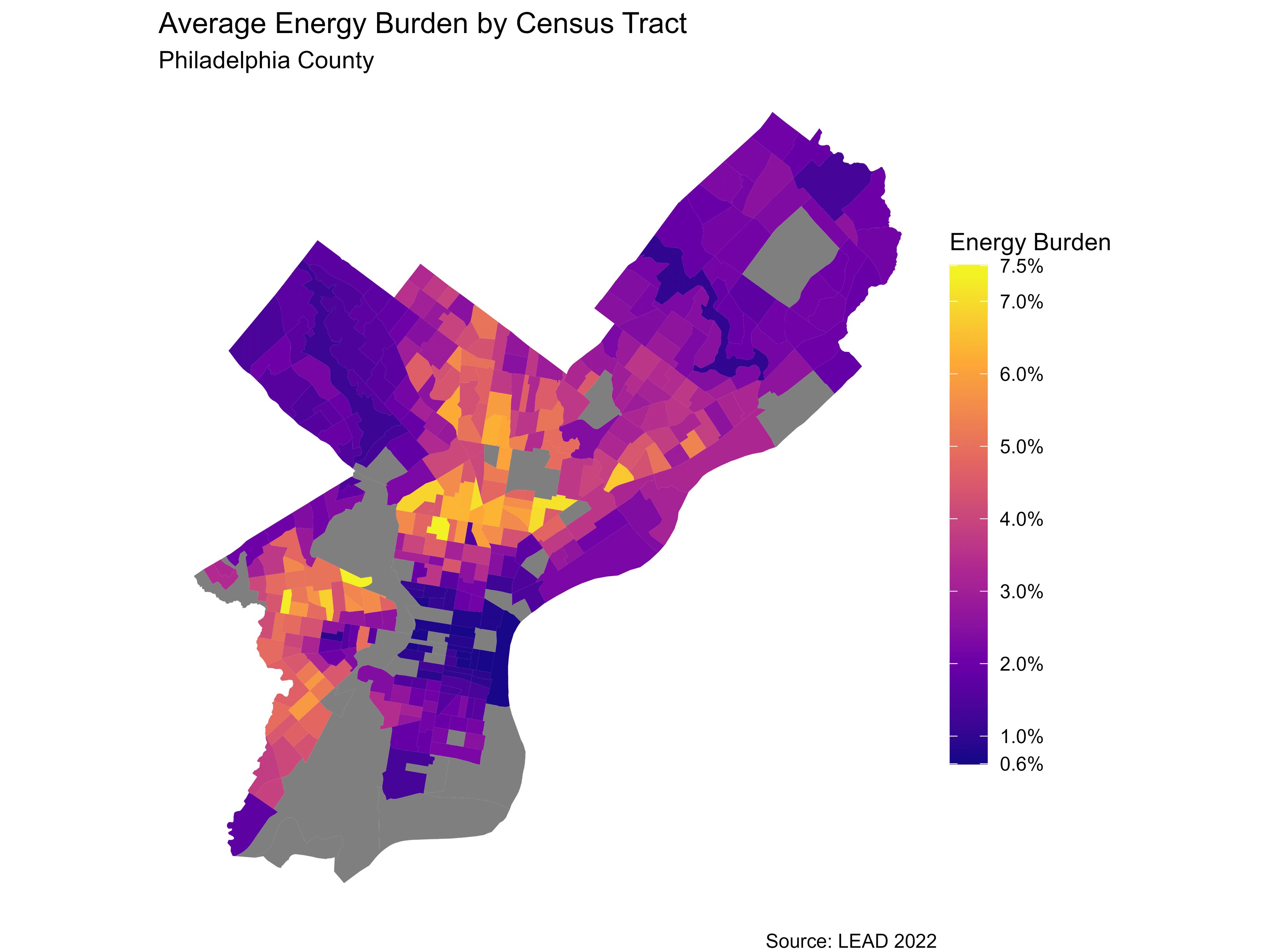 Figure 1: The spatial distribution of energy burden reveals clear clustering of high-burden census tracts in Central, West, and North Philadelphia, showing patterned variation in energy affordability across neighborhoods.
Snippets of Findings
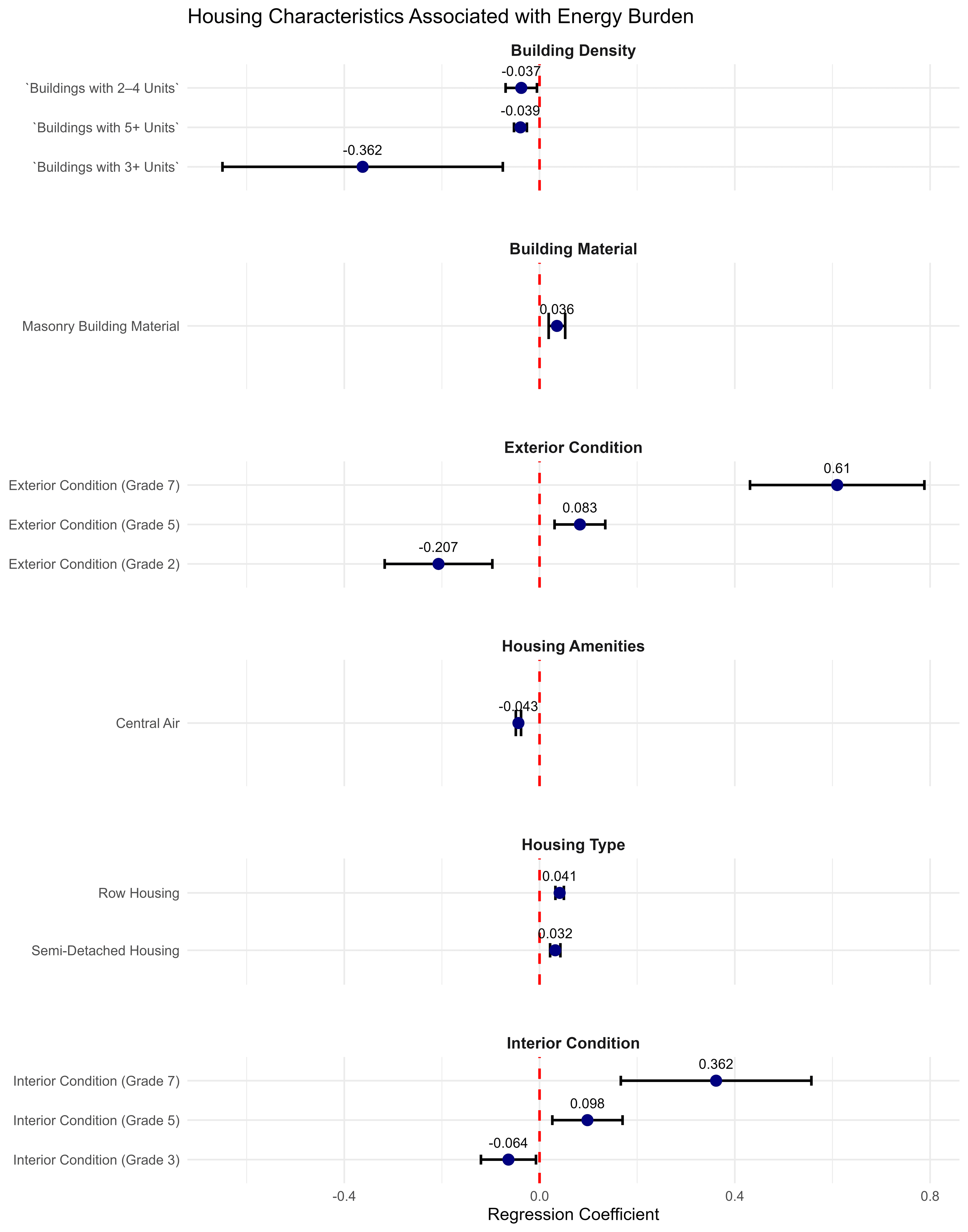 Figure 2: Estimated regression coefficients showing the relationship between several housing characteristics and energy burden across Philadelphia census tracts.
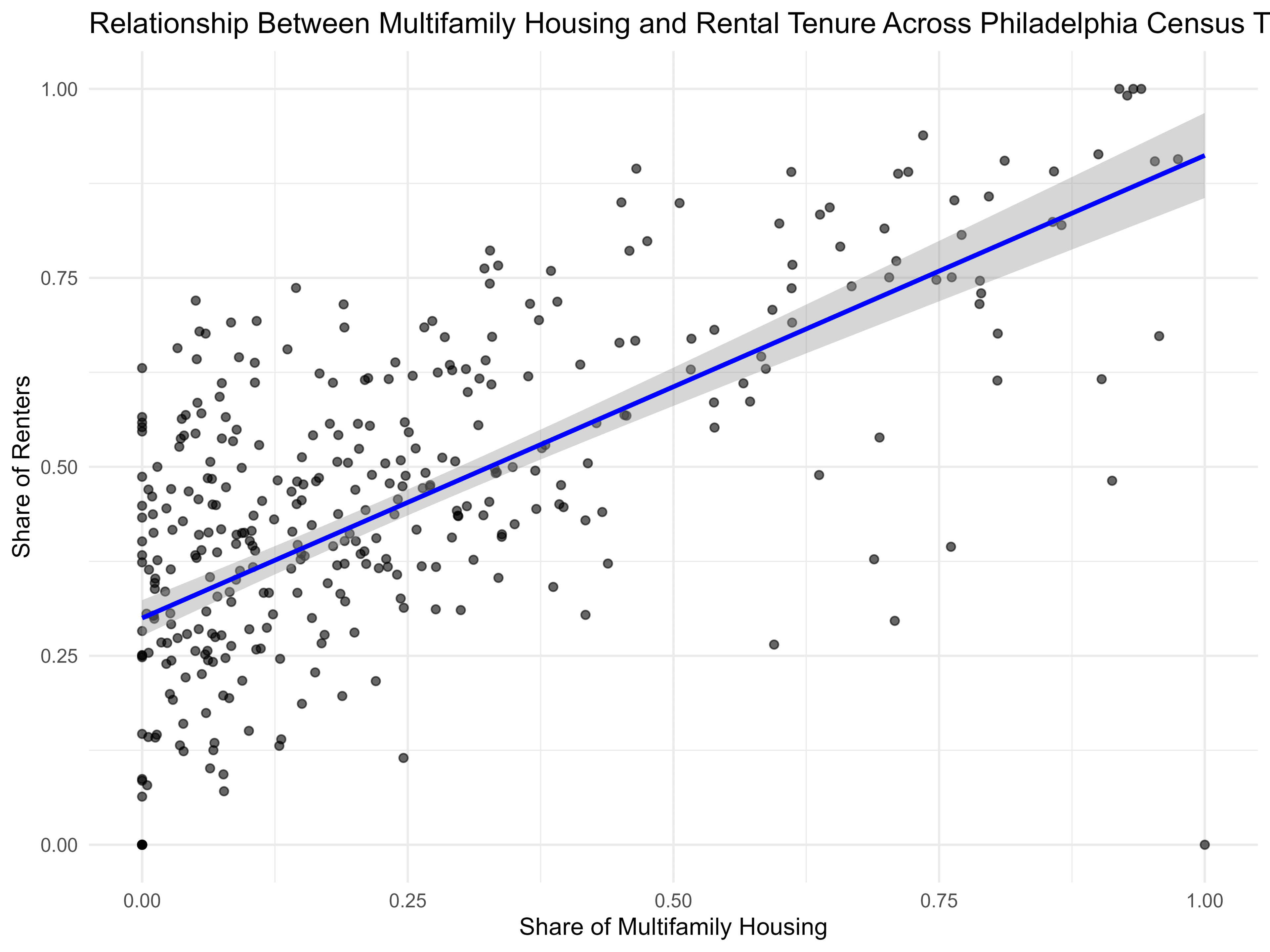 Figure 3: Positive relationship between multifamily housing and percentage of renter tenure across Philadelphia census tracts.
- Higher-quality housing conditions (e.g., Graded 2 and 3 by Philadelphia Property Assessments) are associated with lower energy burden, while poorer conditions (e.g., Grades 5 and especially Grade 7) significantly increase energy burden as shown in Figure 2, highlighting the strong impact of housing quality.
- Higher-density housing, particularly buildings with three or more units, is associated with lower energy burden as shown in Figure 2, suggesting that multifamily structures are more energy efficient due to shared infrastructure and reduced heating and cooling needs.
- While multifamily housing structures are associated with lower energy burden due to efficiency gains, their strong correlation with renter tenure as shown in Figure 3 introduces a countervailing effect, as renter-heavy neighborhoods experience significantly higher energy burden. This reveals that energy inequality is shaped by the interaction between physical housing systems and socioeconomic tenure patterns.
Year: 2025–2026
Category: Urban Spatial Analytics
Institution: University of Pennsylvania, Weitzman School of Design
Status: In progress